Sunday, 11 December 2011

9th December- taking pictures for our magazine and poster.

On Friday we took pictures of our main actress Megan for our magazine front cover and our film poster. I took a few 'behind the scene' photos to show everyone what we got up to that evening.
In our group discussion we decided for our magazine front cover we wanted to do a picture of Megan in character and one out of character-as an actress. We took photos of Megan as an actress first and chose quite shimmery neutral eye shadows and pink lips.
We put up a black background for our shots so it would be quite dramatic.
We used a light reflector to change the contrast on Megan's face and make her eyes stand out more.

We all took turns so we could all have a go at taking the photos. We tried to put Megan in different scenery's so we would have as many photos as possible to choose from. We also did a few shots outside where Megan was in character.


For the photos where Megan is in character we added some makeup to make her look like she was crying and all her make-up was smudged. We had to use onions to make Megan cry, so i hope the photos turned out well!

Friday, 9 December 2011

Production Company Logo.

This is our production company logo. we realised that we couldn't re-use our production company from last year because it was a romantic comedy and we are doing a thriller trailer. I thought of the name Night View because it appealed to the thriller genre. We thought about how we wanted to lay out our logo and someone suggested we use cat eyes. We got an image of cat eyes and made the background black so the eyes would stand out more. Then we added the 'night' on top of one eye and 'view' on the other. I think this was very effective. We saw on other production companies that the word 'production' is usually spaced out and we liked how that looked so we added that on the bottom of the eyes.

Thursday, 8 December 2011

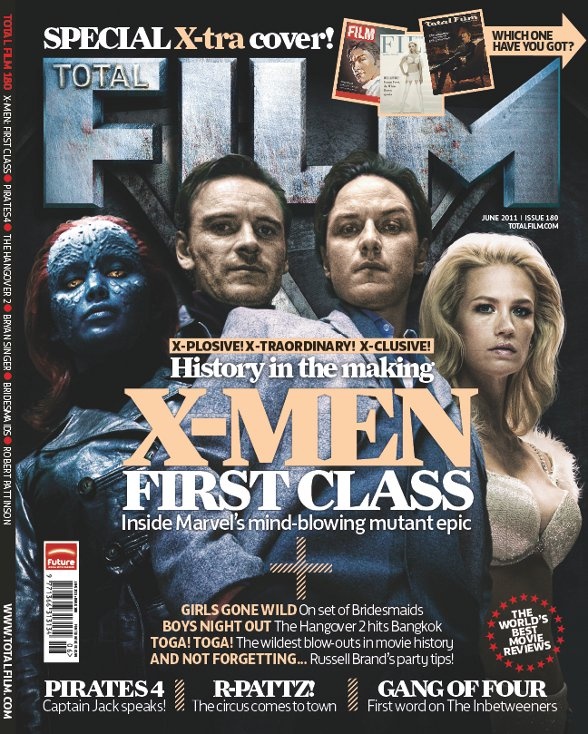
Film Magazine Research.

This is an example of a film cover from the magazines 'Total Film'. The title looks like it is made out of metal, which makes an impact and makes the letters stand out. The title is quite big and takes up about a third of the page. This allows the reader to easily read the title. However the people on the front of the magazine are covering part of the title which shows that they are the main focus. The font all seems to be the same which is unusual for magazines as they use two or more different fonts on the front cover. The colours of font only use two colours white and peach. From my research into magazine covers I’ve concluded that magazines use two colours of fonts, usually white and another colour. The background of the cover is very dark and it looks like there is an X in the background. It looks like the Cerebro door from the X-men films, which fans would recognise. The text has a theme of ‘X’ on it, with words such as ‘X-plosive’ and ‘X-tra’ which is a pun of the title X-men First Class. The text on the cover seems to go in a ‘G’ shape with text at the top, side and in the middle expending in front of the actors advertised. There are four actors advertised on the cover which is very unusual because there is usually only one or in some cases two, but four is strange. They are all using the Gaze, the romantic or sexual pose. There are two men and women which makes the magazine appeal to both males and females. One of the women is a mutant which informs the audience about what the film would be about if they are oblivious.

Saturday, 3 December 2011

Magazine Draft.

As well as doing a draft for our film poster we decided to do one for our magazine front cover too. We researched conventions of a magazine cover to decide what to put on there. We found that on magazine covers, the title is big and bold usually at the top of the page, the font is not the same on the whole magazine, different colours of fonts are used and there is always a bar code on it. We chose the name 'CineMag' because its short but memorable and it also tells the audience what the magazine entails. We decided to turn the word 'mag' on its side so it wouldn't look so cluttered. we also added some text above the title because we saw some magazines do that. When we were researching magazines we found that some magazines have a lot of text on it and some had very little. We decided that we would have little text, just the important things so you could see more of the photograph. We used red, white and grey for our colour scheme. We used the red for the more interesting words so it would be more eye-catching. We added a picture of a new upcoming director because we saw on other magazines there would be more than one photograph. We used our main actress's name Megan Curtis instead of her character so we could introduce her as an actress more than the character she plays. We put her name in big writing so people notice it.
We're not sure if we want the photograph on the cover of our magazine to be Megan in character, or as the actress. We decided we would take pictures of both and see which one works better.

Wednesday, 30 November 2011

Poster draft.

We decided to make a draft of our film poster so we know what we need to take pictures of when we come to making the real thing. we thought it would be useful to look at too see if the images fit together.


We liked how half the face of the girl is shadowed, and thought that it showed mystery and suspense.


We researched different fonts on dafont.com. We couldn't decide what font we wanted to use because we liked them all, but we decided that after we have taken the photo we would choose it then.

Monday, 28 November 2011

The Gaze.

According to Wikipedia 'the gaze' is "analysing visual culture...that deals with how an audience views the people presented. Simply its just about who is doing the looking. A key feature of the gaze is that the subject of the gaze is not aware of the current viewer. there are many different types of gaze:
  • The spectator gaze- this is the type of gaze where the viewer is gazing at an image of a person, animal or object in the text.
  • The intra diegetic gaze- the gaze of a person at another in the world of text, often portrayed in a point of view shot.
  • The direct or extra diegetic address to the viewer- a person gazing as if he was out of the frame of the text and gazing at the viewer, with certain gestures.
  •  The look of the camera- the way the camera appears to look at people photographed.
Advertisements aimed at women use the mirror affect, where the women is encouraged to view themselves as the photographer views the model, therefore by buying the product the model is advertising they think they become more like the model.
As well as theses gazes Marjorie Ferguson found four types of facial expression in the cover photos of British women’s magazines:
1. The chocolate box: this is where women pose with a half/full smile, with their lips not visible. The mood they are trying to achieve with this is a pleasing warm perfection.

2. Invitational: this is where the emphasis on the woman is on the eyes, mouth (slightly smiling), position of head (tilted to one side or looking back at the camera). The mood they are trying to achieve with this is mystery or mischief .


3. Super-smiler: this is a full face, very smiley type of pose with the head thrusted forward and the hair wind swept. The mood is shown as slightly aggressive but innocent and demanding that they look at them.

4. Romantic or sexual: this includes a male and female with the pose of dreamy expression, with heavy lids and unsmiling faces. the mood comes across as sexual or 'available'.


Facial expressions of females in advertisement:
  1. Soft/introverted
  2. Cool/level
  3. Seductive
  4. Narcissistic
  5. Carefree
  6. Kitten like
  7. Maternal
  8. Practical
  9. Comic
  10. Catalogue
Facial expressions of males in women's advertisements, theses are similar to the woman's facial expressions:
  • carefree
  • practical
  • seductive
  • comic
  • catalogue
A female model typically averts her eyes, expressing modesty, patience and a lack of interest in anything else but a male model looks up. His look suggests an interest in something else that the viewer cannot see; it doesn’t suggest any interest in the viewer like they are barely acknowledging the viewer. In the cases where the model is looking up, this always suggests spirituality, he might be there for his face and body to be gazed at, but his mind is on higher things.  Male pin-ups more often than not do not look at the viewer. When they do, what is crucial is the kind of look that it is, something very often determined by the set of the mouth that accompanies it. When the female pin-up returns the viewer’s gaze, it is usually some kind of smile, inviting. The male pin-up simply still stares at the viewer.

Friday, 25 November 2011

Target Audience Research.

We decided to do research into what films our age group preferred. We made a questionnaire of 5 questions and handed it out to 10 boys and girls.
The Results.
The first question was 'what sort of film would you like to see with a group of friends'.

The results showed that the films males and females would like to watch with friends are 'thillers'. This is good because that is our chosen choice of genre for our film. Girls wanted to watch thrillers more than boys so this shows us that our films will have to appeal more to girls than boys.
The second question is 'do you like the hero to be a girl or a boy?' our results showed that both males and females wanted males to be the hero of the film.  The plot of our film doesn't include a hero therefore it doesn't matter too much that our hero is not a boy. 
The third question is 'would you like the main character of the film to be a similar age to yourself?' The response showed that all the females and many of the males wanted the main character to be a similar age to themselves. This is a pleasing response as our main character is the same ages as all the people we asked.

The last question is 'what type of ending would you prefer', a happy ending, sad ending or not expected. Both males and females answered that they wanted a not expected ending. As we are doing a trailer we wouldn't see the ending so it doesn't matter.


Thursday, 24 November 2011

Thriller film poster conventions- further research.

This poster of Shutter Island follows the conventions of a thriller movie poster. The background is dark, the mood is serious and the title is red. The things that stand out the most in the poster would be the match Leonardo Dicaprio is holding and the red title. The vibrant colour of the fire contrasts with the darkness of the scene below. The expression on Leonardo Dicaprio face is very serious, almost confused and he is not looking directly into the camera suggesting mystery and foreboding. The image of Leonardo is faded which also suggests mystery or I think it could suggest secrecy, as if he is trying to hide from someone. The image below looks like an island prison, which backs up the title 'Shutter Island'. It looks like it is raining in the image around the island and the waves look quite rough, which aswell could suggest foreboding to the storyline. The title of the film uses the colour red, which is a little unusual because the colour of the title is usually white. The colour red suggests blood, danger and fire. The tag line is short 'someone is watching' which links with the half hidden face of Leonardo Dicaprio. With reference to our film poster trailer I think the 'Shutter Island' film poster is too busy. We were thinking of a simpler image.

The 'Black Swan' film poster is a very simple poster, but it is effective. This poster is not a conventional thriller film poster because of the colour scheme. The whiteness of the background is untypical for a thriller poster because the backgrounds are usually black or dark colours. The white suggests purity and simple. The simplicity of Natalie Portman’s face is effective because the harsh colours of the eyes and face contrast with how pale her skin is. Her eyes are made to look like swan eyes with the shape of the makeup and the eyes. The eyes and lips are red which suggests evil or blood. The poster doesn’t have a tagline but the title is black which contrasts with the white background.

Wednesday, 16 November 2011

Some conventions of a thriller poster.

Me and my group have decided for our movie trailer we are going to do the genre- thriller. We had some trouble at first trying to think of a genre we all wanted to do, we were going to do a tragedy film but we couldn’t decide on the plot. So instead we thought of an idea for a thriller.

We started to research thriller posters so we could list all the similarities in different posters. We noticed that the colour scheme all the posters had was black, blue and red. Most of the film posters are set at night or against a black background- with the exception of a few.

We also noticed that some Thriller film posters have just the main character, the title and the people who are going to star in the film. Take for example the movie poster 'Salt' and '23'. They both have a profile picture of the main person looking serious. They both have the actors name written across the top and in salt there is a watermark across Angelina Jolies face saying 'Salt'. They both also have tag lines. We haven’t completely decided what we are going to have on out movie poster but we do want a picture of the main character and maybe something that will incorporate with our trailers title.


Saturday, 12 November 2011

Analysis of film poster


The film 500 Days of Summer is non conventional romantic comedy of a man who falls in love with a girl who doesn’t believe in love. The film consists of a non linear narrative of the 500 hundreds days that the boy-Tom and the girl-Summer spent together, the highs and the lows.
The part of the poster that stands out the most would be the photos and the title. There is a collage of 500 photos of the Summer which links to the title 500 Days of Summer, this could also represents the 500 days Tom and her spent together. However this could show all the things tom remembers about Summer because there are only pictures of her and not really him. There are many different shots of her and different parts of her face which could suggest the slight obsession Tom may have of Summer.

The colours in the poster are blue and yellow.  The yellow is very bright and links in with the title and the theme of summer. The shape behind the title further links towards summer and could symbolize the sun. The blue, that is used in the photos is quite neutral which is unusual for a romantic comedy film because they are usually full of bright vibrant colours, but this could be done to show that it is not a conventional romantic comedy. I researched other rom com posters and found that most of them are of the two love interests in a plain background. This could also link to the fact that the film is not a typical rom com.
The title is a stereotypical aspect to a romantic comedy because it is white. The title is bold and in capitals to draw the audiences eyes to it and also make it stand out in front of the photos.

The drawings at the bottom of the poster shows and the picture of Tom drawing gives indication that drawing is part of his job or is a hobby he likes doing. The font of the actors names and tag lines also suggest its someone’s handwriting which makes the film seem less formal.
The tag line ‘This is not a love story. This is a story about love’ further links to the non conventional aspect to the romantic comedy. The actor’s names appear at the top of the film but are quite small which is unusual for a romantic comedy. This could suggest that the film producers don’t want people to watch the film for the actors but for the message of the film itself.
There is no release date but it does say ‘In theatres this summer' which also links to all the summer aspects to the film. i think the target audience for this poster is men because of all the attractive pictures of Summer in the background and it doesnt look like a stereotypical romantic comedy poster. However it could also appeal to women because of the attractive man in the corner of the poster.

Sunday, 9 October 2011

How are young people represented in the print media and what effect does it have on the public and young people themselves.

 Young people are represented many different ways in the print media. Like the TV media some articles present youngsters negatively, as violent and immature whilst others think that young people are growing up too fast and doing things their age group should not be doing. There are some stories of young people being inspirational to others but the negative stories outweigh the positive ones.
An example of how young people are represented is in article 3 ‘Are our kids over sexualised? This article explains how girls are wearing and doing things that girls that young are not supposed to do. An example used in the article is the debate that two twitter users were having as to whether 13 year old girls were allowed to have wax treatments. They go on to explain about sexual clothing that is sold in store in the UK, clothing like padded bras and vulgar tee-shirt slogans. The effect on the public by these kinds of articles is views of disgust. Young people here are viewed as trying to act older than their age but the public seem to blame parents for letting their children wear and act these ways. In the article they describe parents as ‘dumb’ and ‘mindlessly’.
In article two ‘hoodies, louts, scum’: how the media demonises teenagers’ it actually explains how the print media judges teenagers and makes the public fear all teenagers. The article writes about how words like ‘yobs’ ‘thugs’ ‘sick’ etc are used in articles in the past year and how many times they are used. This represents teenagers as violent, dangerous beings who are all the same as each other. There are real life situations where shop owners don’t allow youngsters into their store just because of their age. The article in fact, quotes ‘negative reporting is actually being done to the people we most need to protect’. The article is saying how the public needs to protect the youngsters instead of fearing and demonising them.
The last article ‘drinking neat vodka through your eye for a quick buzz?’ tells a story of a girl who has been made a victim for doing this at university. She now has serious problems with her eye that she has to live with for the rest of her life. This article is aimed at older people who are in university. The article explains how the girl ‘Melissa’ felt pressurised and just did the ‘eyeballing’ to fit in with the crowd. This print media does not just slam young people for doing this insane drinking game but also talks about respected adults doing it at office parties and also filming it to go on YouTube. Young people would be seen as reckless and dangerous by doing this.
In conclusion the print media represents young people as acting older than their age, acting irresponsible but they also realise that the media prints negative things about teenagers that makes the public act discriminative towards them and think all teenagers are the same.

Saturday, 8 October 2011

Stanley Kubrick

Stanley Kubrick is an American film director who has directed many critically acclaimed films such as The Shinning, A Clockwork Orange and A Space Odyssey. Kubrick used a lot of violence and nudity in his films and this is a running theme throughout. In fact A Clockwork Orange was banned in the UK because of the shocking use of nudity and violence. People all around the UK were shocked by how Kubrick openly filmed the character Alex raping a woman whilst singing 'singing in the rain'. There are lots of examples in A Clockwork Orange of violence but also in his other film The Shining. There are scenes of nudity in the shining however not as many A Clockwork Orange. There are many examples of violence however, when Jack goes insane and tries to kill his whole family.

Monday, 19 September 2011

Similarites between 'Kidulthood' and 'A Clockwork Orange'

Although the films ‘Kidulthood’ and ‘A Clockwork Orange’ are very different in storyline, what time period it is set in and genre it has some similarities as well.

‘Kidulthood’ is shown to be quite shocking and thought provoking, but the director wanted to do this to shock the audience and also let them think ‘is this what the youth are like in some places?’. In ‘Kidulthood’ violence is shown in quite a normal way, for example when the girl beats the other girl up in the classroom no one intervenes they just stay quite.

Also there is no older authority in ‘Kidulthood’ there are no teachers around when the girl is getting beat up and the teachers seem quite anxious around the pupils.

There also seems to be a status system in the school with Sam being the highest. He doesn’t even go to the school but seems to have a hold over all the pupils in the playground. He even says to one girl that he can make everything go away if he sleeps with her.

In ‘A clockwork orange’ there are similarities with the fact that Alex is in a gang, like Sam is. They inflict violence on other people for fun whereas in ‘Kidulthood’ the violence is to show status. There is a similarity with oblivious parents. In ‘Kidulthood’ the parents of the girl who was beat up seem oblivious that she is being bullied and when they realise, it is too late. In ‘A clockwork orange’ the parents of Alex don’t know what he does at night but it’s almost as if they don’t want to know.

I think there are more differences than similarities in ‘A Clockwork Orange’ and ‘Kidulthood’ but they do have some similarities.

Sunday, 11 September 2011

Media Theories

There are many different media theories and specific example in the media which support these theories.
Stuart Hall’s theory is that young people rebel because they don't want to end up like their parents.
Another theory is Marcel Danesi's theory that youth is important so older people hold onto their youth and act immature as a result of it. An example of this is in the TV series Friends. There are numerous episodes where the characters don’t act their age and do immature things that they regret later on. For example in the episode 'the one where they all turn 30'  the characters do things like get drunk at their 30th birthday party, or make bargains with god to not let them turn 30. All these example support Marcel Danesi's theory.
http://www.tv.com/shows/friends/the-one-where-they-all-turn-thirty-17474/

The Marxists of the Frankfurt school of social studies says that communism is important and every man should be equal to one another.
The last media theorist is Stan Cohen who believes that the mass media labels young people and the behaviour they show is a result of being labelled. For example in the TV show Eastenders the character 'Fatboy' is portrayed as a chav by the way he dresses and his dialect.